Songara All Ayurvedic
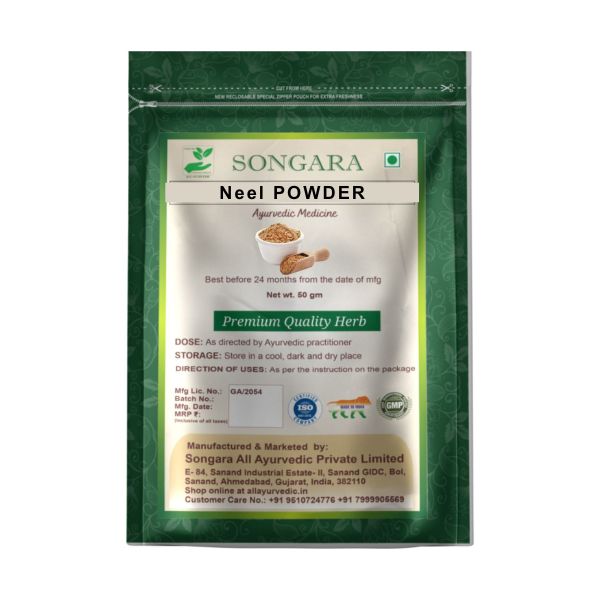
Neel (Nili) Powder A Pure Ayurvedic Herb – Indigofera Tinctoria
Neel (Nili) Powder A Pure Ayurvedic Herb – Indigofera Tinctoria
पिकअप उपलब्धता लोड गर्न सकिएन
🌿 Nīlī (नीली) – Indian Indigo / Common Indigo
Botanical Name: Indigofera tinctoria Linn.
Family: Fabaceae (Papilionaceae)
English Name: Indian Indigo / Common Indigo
Part Used: Leaves, Root, Whole Plant
Ayurvedic Category: Rechana Dravya (Purgative Group), Keshya Dravya (Hair Tonic Group)
1. Synonyms (पर्यायवाची नाम / Synonyms and Etymology)
Sanskrit Synonyms:
नीली (Nīlī), नीलिनी (Nīlinī), तूणी (Tūnī), काला (Kālā), दोला (Dolā), नीलिका (Nīlikā), रञ्जनी (Rañjanī), श्रीफली (Śrīphalī), तुच्छा (Tucchā), ग्रामीणा (Grāmiṇā), मधुपर्णिका (Madhuparnikā), क्लीतका (Klītakā), कालकेशी (Kālakeśī), नीलपुष्पा (Nīlapuṣpā)
Etymological Meanings:
- नीली / नीलिनी: “नील उत्पद्यतेऽस्या इति” – The plant that produces blue colour (dye).
- काला: “कृष्णवर्णा” – Denoting its dark hue.
- दोला: “दोलायते वायुना” – The plant swings gently in wind.
- रञ्जनी: “रञ्जयति वा अनया” – Used for dyeing and colouring fabrics.
- श्रीफली: “श्रीमत् फलमस्या” – The plant bears beautiful fruits.
- तुच्छा: “तुत्थवन्नीलवर्णा” – Produces a blue colour like blue vitriol.
- ग्रामीणा: “ग्रामे भवा” – Commonly cultivated in villages for dye extraction.
- मधुपर्णिका: “मधुराणि पर्णान्यस्याः” – The leaves are slightly sweet to taste.
- क्लीतका: “क्रीतकं विनिमयः” – Used as a commercial and trade product (blue dye).
- कालकेशी: “कृष्णाः केशाः भवन्ति अनया” – Used to blacken and beautify hair.
- नीलपुष्पा: “नीलवर्णानि पुष्पाण्यस्या” – The plant has blue or violet flowers.
2. Regional Names (प्रादेशिक नाम / Regional Names)
| Language | Name |
|---|---|
| Hindi | Nīlī (नीली), Līlā (लीला) |
| Bengali | Nīl (নীল) |
| Gujarati | Guli, Nīl |
| Marathi | Nīl (नीळ) |
| Kannada | Nīli (ನೀಲೀ) |
| Telugu | Nīli, Nilī Chettu |
| Tamil | Avari (அவரி) |
| Malayalam | Nīlam (നീലമ്) |
| Oriya | Neli |
| English | Common Indigo, Indian Indigo |
| Sanskrit | Nīlī, Rañjanī, Kālakeśī |
3. Botanical Description (वनस्पति विवरण / Botanical Description)
Nīlī (Indigofera tinctoria Linn.) is a perennial shrub native to tropical regions of India, cultivated for its natural blue dye and therapeutic properties.
- Habit: Erect or spreading branched shrub, up to 1.5–2 meters in height.
- Leaves: Pinnate, alternate, with 3–13 leaflets; leaflets oval, green when fresh, turning greyish-black upon drying; tender branches are bluish-red.
- Flowers: Small, pink or purplish, arranged in lax axillary racemes.
- Fruits (Pods): Cylindrical, greenish-grey when young, dark brown when mature, containing 10–12 seeds.
- Seeds: Small, smooth, light brown.
- Distribution: Grown throughout India — especially in Bengal, Bihar, Gujarat, and Tamil Nadu. It also occurs wild as Indigofera paucifolia (Jangali Neel).
- Cultural Note: Historically cultivated for indigo dye production; the “Indigo Revolt” of Bengal (1859–60) arose due to its commercial importance.
4. Chemical Constituents (रासायनिक संघटक / Chemical Composition)
Primary Constituents:
- Indican (glycoside): Yields indigo (blue dye) on hydrolysis and oxidation.
- Galactomannan: Isolated from seeds.
- Flavonoids: Apigenin, Kaempferol, Luteolin, Quercetin.
- Indicaine: 5–15 mg/g (dry basis).
- Rotenoids: Deguelin, Dehydrodeguelin, Rotenol, Rotenone, Tephrosin, Sumetrol.
- Other Compounds: Isatin precursors (conjugated indoxyl), glycosides, saponins.
Pharmacological Actions (Modern):
- Anti-hepatotoxic: Protects liver against carbon tetrachloride–induced damage.
- Antidepressant: Used in endogenous depression.
- Antimicrobial: Effective against bacteria and skin pathogens.
- Antioxidant and Anti-inflammatory.
References:
- Ayurvedic Treatise, Vol. II, p. 98
- Glossary 2nd Supp., p. 364
- Wealth of India, 1st Supp., Vol. III, p. 335
5. Properties and Therapeutic Uses (गुण एवं औषधीय उपयोग)
Ayurvedic Attributes:
- Rasa (Taste): Tikta (Bitter)
- Guna (Qualities): Laghu (Light), Ruksha (Dry)
- Virya (Potency): Ushna (Hot)
- Vipaka (Post-digestive effect): Katu (Pungent)
- Doshic Action: Pacifies Kapha and Vata doshas
Therapeutic Actions:
- Rechani (Purgative) – Promotes bowel evacuation.
- Vishodhani (Detoxifier) – Purifies blood and system.
- Keshya (Promotes Hair Health) – Encourages hair growth and imparts black colour.
- Udarahara – Useful in ascites and abdominal distension.
- Pittahara – Balances aggravated pitta in the system.
- Shothahara – Reduces inflammation and swelling.
- Vranaropaka – Heals ulcers and wounds.
- Vedanahara – Relieves pain and burning sensations.
6. Therapeutic Uses (औषधीय प्रयोग)
-
Hair Care & Cosmetic Use:
The paste of Nīlī leaves is applied externally to promote hair growth and to darken greying hair naturally. -
Skin and Wound Healing:
Leaf paste is applied to burns, ulcers, and skin infections for quick healing and soothing relief. -
Digestive and Liver Disorders:
Root extract is given in splenic enlargement, ascites, and hepatomegaly, especially in cirrhosis-related swelling. -
Piles (Arsha):
Decoction or paste used both internally and externally to reduce inflammation and pain in haemorrhoids. -
Nervous and Psychological Disorders:
The extract is beneficial in epilepsy, anxiety, and chronic psychological disturbances, improving calmness and reducing dizziness. -
Toxicity and Poisoning:
In rabid dog bite or arsenic poisoning, juice of the plant is administered internally and applied on the bite area. It induces mild purgation, expelling toxins. -
Rheumatic and Vata Disorders:
Relieves joint pain, gout, and stiffness by balancing Vata dosha and reducing inflammation. -
Respiratory Benefits:
Acts as an expectorant in bronchitis and chronic cough. -
Other Indications:
Used in udāvarta (flatulence due to reversed Vata movement), intestinal obstruction, and madā (intoxication).
7. Dose and Usage (मात्रा एवं प्रयोग विधि)
- Powder (Churna): 60 mg to 250 mg, taken with honey or warm water.
- Root Powder: 125–250 mg once or twice daily.
- Decoction (Kwatha): 30–50 ml daily, preferably before meals.
- External Use: Paste of fresh leaves applied on scalp, wounds, ulcers, or insect bites.
- Caution: Higher internal doses act as a strong purgative and may cause headache or nausea. Always use under supervision.
8. Classical References
- Charaka Samhita (Sūtra Sthāna 2): Listed among Rechana Dravya (Purgatives).
- Sushruta Samhita (Sūtra Sthāna 39): Classified under Adhobhāgahara Dravya (Downward-moving eliminatives).
🌸 Conclusion
Nīlī (Indigofera tinctoria) is not only the legendary source of the ancient blue dye but also a potent Ayurvedic medicinal plant. Revered for its detoxifying, purgative, and rejuvenating actions, it supports liver function, purifies blood, heals wounds, and enhances hair health.
It holds equal importance in cosmetic, medicinal, and environmental fields, symbolizing the harmony of beauty and wellness in Ayurvedic tradition.
Ref: Bhavaprakash Nighantu
सामग्री
सामग्री
ढुवानी र रिटर्न
ढुवानी र रिटर्न
आयामहरू
आयामहरू
हेरचाह निर्देशनहरू
हेरचाह निर्देशनहरू
सेयर गर्नुहोस्