1
/
को
5
Songara All Ayurvedic
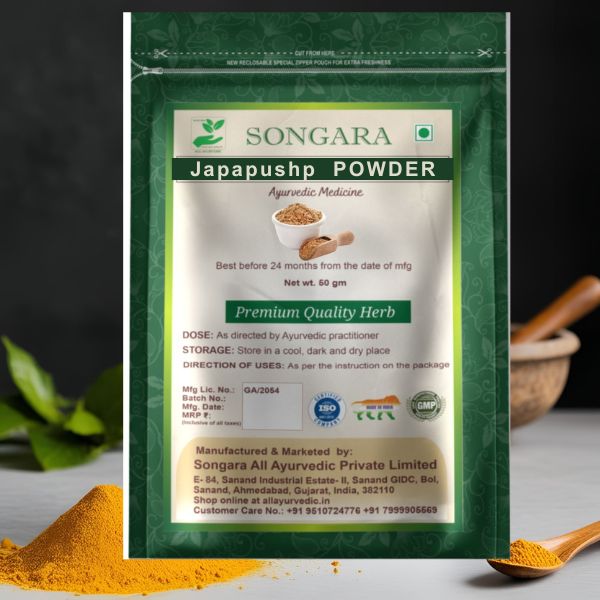
Japapushp or Gudhal Powder: Hibiscus Rosa (50 Gm)
Japapushp or Gudhal Powder: Hibiscus Rosa (50 Gm)
नियमित मूल्य
Rs. 92.00
नियमित मूल्य
Rs. 106.00
बेच्ने मुल्य
Rs. 92.00
Taxes included.
ढुवानी चेकआउट मा गणना।
No reviews
मात्रा
पिकअप उपलब्धता लोड गर्न सकिएन
🌺 Japa (जपापुष्पम्)
Botanical Name: Hibiscus rosa-sinensis Linn.
Family: Malvaceae
English Name: Shoe Flower / Chinese Hibiscus
1. Synonyms (पर्याय नामानि)
- Sanskrit:
- जपा (Japa)
- ओड्रपुष्पम् (Oḍrapuṣpam) – Found in Odradeśa region
- त्रिसंध्या (Trisandhyā)
- अरुणा (Aruṇā)
- सिता (Sitā)
- Etymological Notes:
- "जपा" is derived from “जपादित्वात् जवा” — referring to its name “Javā” (commonly used for red hibiscus).
- "ओड्रपुष्पम्" means "the flower originating from the Odradeśa region".
- “त्रिसंध्या” is mentioned separately in classical texts (not a synonym but related plant name).
2. Regional Names (देशानुसार नाम)
| Language | Name |
|---|---|
| Hindi | गुड़हल (Guḍahal), अढ़ौला (Aḍhaula), जवा-कुसुम (Javā-kusum) |
| Bengali | Java Phul (জবা ফুল) |
| Marathi | Jasvanda |
| Gujarati | Jasuda |
| Telugu | Javā Puspamu, Dasana |
| Tamil | Semparuthi |
| Kannada | Dasvala |
| Malayalam | Chembarathi |
| Oriya | Mondaro |
| Assamese | Joba |
| English | Shoe Flower, Chinese Hibiscus |
3. Botanical Description (वनस्पति विवरण)
- Habit: Evergreen, woody, glabrous, ornamental shrub, 5–8 ft in height.
- Leaves: Bright green, shiny, entire below, coarsely toothed above.
- Flowers:
- Large (4–6 inches in diameter), solitary, axillary, bell-shaped.
- Color varies – red (common), yellow, white, magenta, cherry, striped (many hybrids).
- Stamens and pistil prominently project from the center.
- Fruit: Capsule, round, many-seeded.
- Distribution: Native to China, cultivated throughout India in gardens and homes.
- Other Notes: Crushed flowers yield a dark purplish dye, formerly used to blacken shoes, and still used for hair coloring, eyebrows, and natural dyes in food and liquor industries.
4. Chemical Constituents (रासायनिक संघटक)
- Phytoconstituents found in flowers and leaves:
- Triterpenes: Taraxeryl acetate
- Sterols: β-Sitosterol
- Hydrocarbons: Hentriacontane
- Fatty Acids: Sterculic acid, Malvalic acid
- Flavonoids: Quercetin and its glucosides, Kaempferol-3-xylosyl-glucoside
- Anthocyanins: Cyanidin glucosides, Cyanin and Cyanidin chlorides
- Vitamins: Thiamine (B₁), Riboflavin (B₂), Niacin (B₃), Ascorbic acid (Vitamin C), Carotene
- Other Compounds: Methyl-10-oxo-11-octadecynoate, Methyl-9-methylene-8-oxooctadecanoate, and related oxo-fatty esters
5. Properties and Therapeutic Uses (गुण एवं औषधीय प्रयोग)
| Sanskrit Property | Description |
|---|---|
| Rasa (Taste) | Kashāya (Astringent), Madhura (Sweet) |
| Guna (Qualities) | Snigdha (Unctuous), Picchila (Slimy) |
| Virya (Potency) | Śīta (Cooling) |
| Vipaka (Post-digestive Effect) | Madhura |
| Doshakarma | Pacifies Kapha and Vāta |
| Prabhava | Keshya (Promotes hair growth & strength) |
Pharmacological & Therapeutic Actions
- Keshya: Improves hair strength, color, and prevents hair fall.
- Astringent & Cooling: Controls bleeding disorders (menorrhagia), reduces burning sensation.
- Emollient & Demulcent: Soothes inflamed tissues, used for skin and mucous membrane protection.
- Aphrodisiac & Emmenagogue: Enhances fertility and regulates menstruation.
- Anti-inflammatory: Reduces swellings and boils.
- Refrigerant: Provides cooling and soothing effect.
- Alternative medicine use: Root acts as substitute for Althaea officinalis (Marshmallow root).
Therapeutic Applications (औषधीय उपयोग)
- Hair Care:
- Paste of flowers applied on scalp promotes hair growth, color, and prevents premature greying.
- Paste with cow’s urine is used for alopecia (baldness).
- Boiled with coconut oil for blackening hair and nourishing scalp.
- Skin and Swelling:
- Paste of flowers applied to boils and inflammatory swellings for cooling and healing.
- Gynecological Disorders:
- Paste of 10–12 flower buds with milk given internally in menorrhagia.
- Root powder and juice also effective in excessive bleeding.
- Urinary and Reproductive Disorders:
- Fresh root juice is beneficial in gonorrhoea.
- Respiratory Disorders:
- Root acts as demulcent and expectorant in cough (substitute for Althaea officinalis).
6. Doses (मात्रा)
Dosage Flower Powder / Paste
3–6 g With milk or honey
Summary (सारांश)
Japa (Hibiscus rosa-sinensis) is one of the most revered Ayurvedic herbs known for its Keshya (hair-promoting) properties and cooling, emollient, and astringent actions. It is a common household and cosmetic herb used in hair oils, natural dyes, and skin formulations. Its flowers and roots are medicinally active and are used for menstrual disorders, skin ailments, cough, and gonorrhoea.
सामग्री
सामग्री
ढुवानी र रिटर्न
ढुवानी र रिटर्न
आयामहरू
आयामहरू
हेरचाह निर्देशनहरू
हेरचाह निर्देशनहरू
सेयर गर्नुहोस्
No reviews