Songara All Ayurvedic
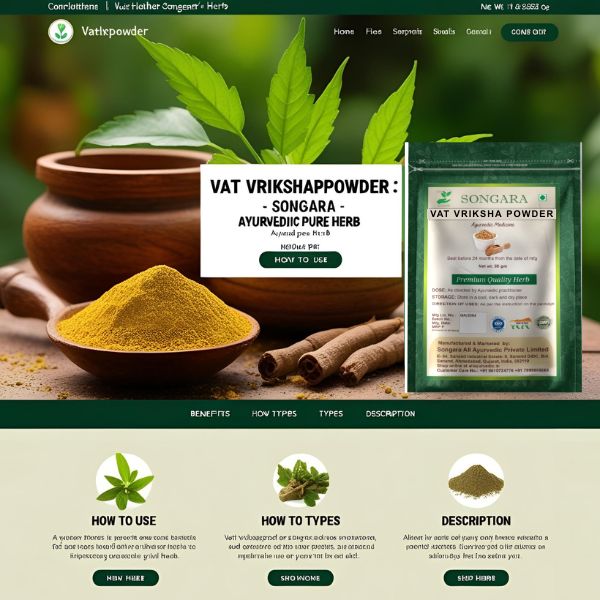
Bad (Vat Vriksha) Powder Ficus bengalensis & Achyranthes aspera – The Ayurvedic Pure Herb (50 Gm)
Bad (Vat Vriksha) Powder Ficus bengalensis & Achyranthes aspera – The Ayurvedic Pure Herb (50 Gm)
पिकअप उपलब्धता लोड गर्न सकिएन
🌳 VAT VRIKSHA (Ficus benghalensis Linn.)
Common Name: Banyan Tree
Family: Moraceae
Part Used: Bark, Root bark, Aerial roots, Latex, Fruits
1. Synonyms
Sanskrit Names:
वटः (Vataḥ), रक्तफलः (Raktaphalaḥ), शृङ्गी (Śṛṅgī), न्यग्रोधः (Nyagrodhaḥ),
स्कन्धजः (Skandhajaḥ), ध्रुवः (Dhruvaḥ), क्षीरी (Kṣīrī),
वैश्रवणावासः (Vaiśravaṇāvāsaḥ), बहुपादः (Bahupādaḥ), वनस्पतिः (Vanaspatiḥ)
Etymological Meanings:
- वटः – “Vatayati” – surrounds other trees with its roots.
- रक्तफलः – bears red fruits.
- शृङ्गी – having horn-like projections (leaf buds).
- न्यग्रोधः – sends down roots from above that grow downward.
- ध्रुवः – ever-lasting or firm.
- क्षीरी – latex-bearing.
- बहुपादः – possessing numerous roots.
- वनस्पतिः – ruler or lord of the forest.
2. Regional Names
| Language | Name |
|---|---|
| Hindi | Vat, Bargad, Baragada |
| Bengali | Vata, Bara |
| Marathi | Vad |
| Gujarati | Vad |
| Tamil | Ala, Alamaram |
| Telugu | Marri, Pedda Marri |
| Kannada | Ala |
| Malayalam | Ala, Vatam |
| English | Banyan Tree |
3. Botanical Description
Botanical Name: Ficus benghalensis Linn.
Family: Moraceae
A large, spreading evergreen tree known for its extensive network of aerial roots that grow into subsidiary trunks, giving it a majestic and sacred appearance.
- Height: Up to 100 feet or more.
- Trunk: Massive, with many aerial roots developing into accessory stems.
- Leaves: 4–8 inches long, thick, leathery (coriaceous), ovate to elliptic, with a rounded or sub-cordate base.
- Fruits: Sessile, in pairs, round, scarlet red when ripe, about 1–1.5 cm in diameter.
- Latex: White, milky, sticky, present in all parts.
Habitat:
Common throughout India; grows epiphytically in young stage on other trees, old buildings, and walls. Thrives in warm tropical regions.
Varieties:
- Ficus krishnae (with cup-shaped leaf bases, known as Krishna Vata).
- Ficus benghalensis var. thonningii – sometimes used synonymously in tropical zones.
Cultural Note:
Revered as sacred in India and considered the abode of Lord Vishnu and Kubera (Vaiśravaṇa). Cutting or harming the tree is traditionally considered sinful.
4. Chemical Constituents
Identified Phytochemicals:
- Leaves: Quercetin-3-galactoside, Rutin, Friedelin, β-Sitosterol.
- Bark: Leucoanthocyanin, Flavonoids (Bengalenoside, Leucocyanidin derivatives).
- Heartwood: Tiglic acid ester of γ-Taraxasterol.
- Fruit: Dietary fibres, lignin, phytosterols, flavonoids.
- Roots: Phytosterolin (hypoglycemic compound).
Pharmacological Activities:
- Antidiabetic
- Antitumor
- Antibacterial
- Hypocholesterolemic
- Anti-inflammatory
- Antioxidant
Research Highlights:
- Fruit fibre lowers serum cholesterol in rats.
- Aerial root extract reduces blood sugar significantly (81% equivalent to Tolbutamide).
- Bark extract reduces serum cholesterol and blood urea levels.
- Bengalenoside (isolated flavonoid) shows strong hypoglycemic action with low toxicity.
5. Properties and Therapeutic Uses
Ayurvedic Properties
| Rasa (Taste) | Kashaya (Astringent) |
|---|---|
| Guna (Quality) | Guru (Heavy), Grahi (Absorbent) |
| Virya (Potency) | Sheeta (Cold) |
| Vipaka (Post-digestive effect) | Katu (Pungent) |
| Doshic Effect | Pacifies Kapha and Pitta doshas |
Classical References
- Charaka Samhita: Mentioned in Mutrasangrahaniya Mahakashaya (urine-retaining herbs) and Kashayaskandha.
- Sushruta Samhita: Included in Nyagrodhadi Gana (group of astringent herbs).
Therapeutic Actions
- Vrana ropaka – Heals wounds and ulcers
- Prameha hara – Controls diabetes mellitus
- Shothahara – Reduces swelling and inflammation
- Raktapitta nashaka – Checks bleeding disorders
- Varnya – Improves complexion
- Stambhaka – Astringent, arrests excessive secretions
- Vrishya – Aphrodisiac, promotes semen health
- Yoni roga hara – Relieves gynecological disorders
Medicinal Uses
- Latex:
- Applied externally for pain, bruises, rheumatism, cracked heels, and toothache.
- Acts as an anodyne and healing agent.
- Bark Decoction:
- Used in diarrhoea, dysentery, and excessive urination (polyuria).
- Helpful in diabetes mellitus and urinary disorders.
- Root Bark:
- Reduces blood sugar; used in diabetic conditions.
- Aerial Roots:
- Used as antiemetic, in vomiting and skin diseases.
- Fruits:
- Nutritive, rich in fibre; used in cholesterol control.
- Bark Juice with Fruit Paste:
- Acts as aphrodisiac and in spermatorrhoea.
- Modern Pharmacology
- Antidiabetic activity: Attributed to bengalenoside and leucopelargonidin.
- Antioxidant & cardioprotective: Due to flavonoid glycosides.
- Anti-inflammatory: Supports joint pain and arthritis relief.
-
6. Dose
Powder (Churna) 3–6 g With honey or milk
⚠️ Caution: Excessive intake may cause constipation due to strong astringency.
Safe for long-term use under Ayurvedic guidance.
Summary
Vat Vriksha (Ficus benghalensis) is a sacred and medicinal giant of Ayurveda — symbolizing stability and longevity. Its bark, roots, and latex are revered for astringent, cooling, and healing properties. Renowned as a natural antidiabetic, wound healer, and rejuvenator, it supports urinary health, skin vitality, and blood sugar balance.
🌿 A divine tree that sustains life, health, and spiritual purity — truly a “Vanaspati Raja” (King of Forest Trees).
सामग्री
सामग्री
ढुवानी र रिटर्न
ढुवानी र रिटर्न
आयामहरू
आयामहरू
हेरचाह निर्देशनहरू
हेरचाह निर्देशनहरू
सेयर गर्नुहोस्