Songara All Ayurvedic
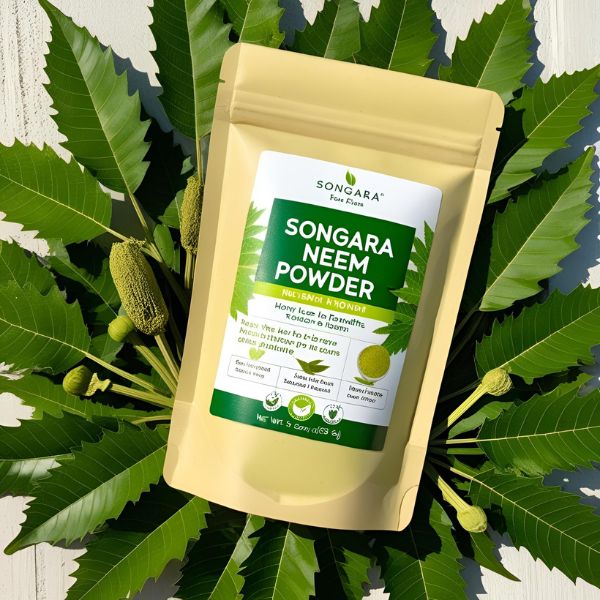
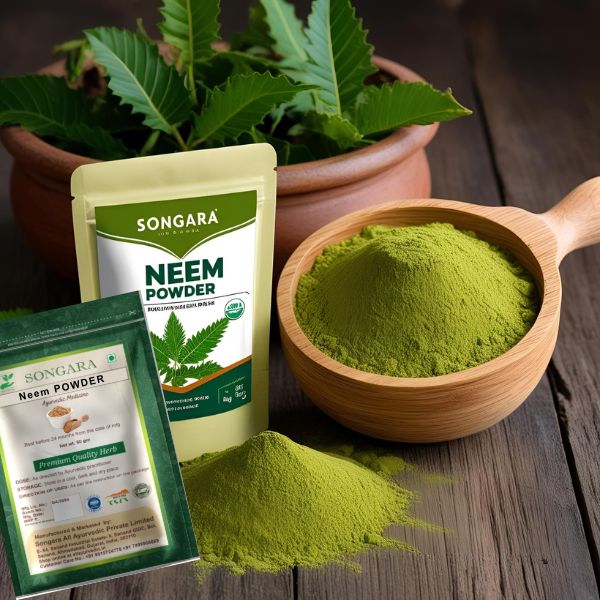
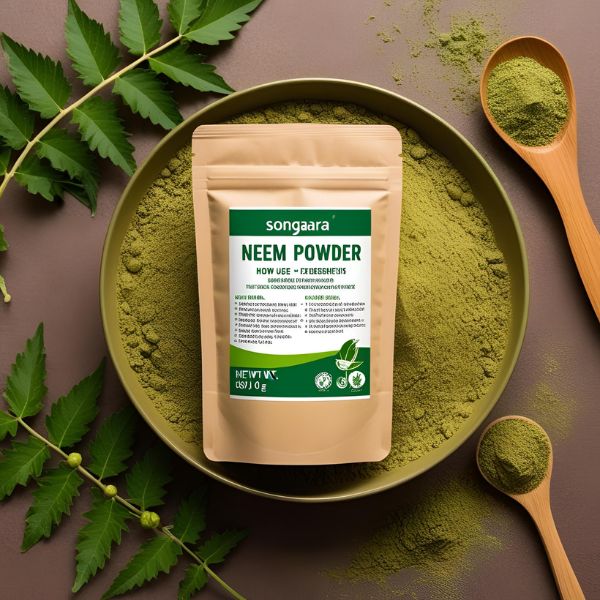
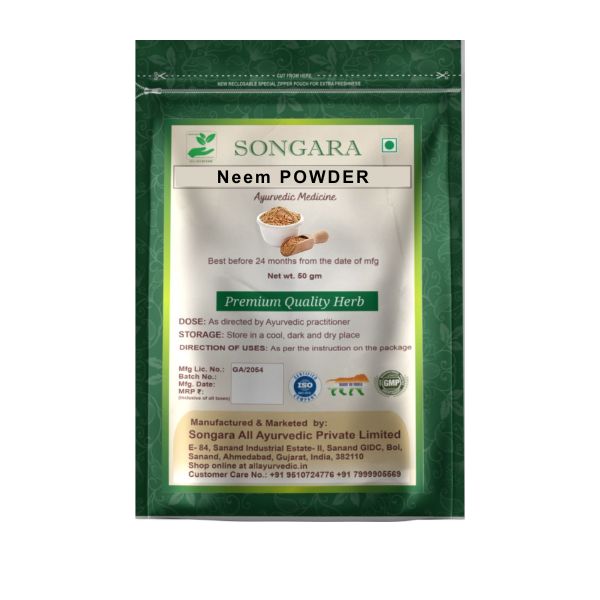
Neem Powder – Nature’s Ultimate Ayurvedic Remedy
Neem Powder – Nature’s Ultimate Ayurvedic Remedy
تعذر تحميل مدى توفر الطلب
Neem (Nimbaḥ / Azadirachta indica A. Juss.)
1. Synonyms
Nimba is one of the most revered trees in Ayurveda, known for its wide therapeutic actions and purifying properties.
Sanskrit Synonyms:
निम्बः (Nimbaḥ), पिचुमार्दः (Picumardaḥ), पिचुमन्दः (Picumandaḥ), तिक्तकः (Tiktakaḥ), अरिष्टः (Ariṣṭaḥ), पारिभद्रः (Pāribhadraḥ), and हिङ्गुनिर्यासः (Hiṅguniryāsaḥ).
These names highlight its bitter taste (Tikta rasa), disease-destroying nature, and ability to purify blood and eliminate toxins.
English Name: Neem, Indian Lilac
Botanical Name: Azadirachta indica A. Juss.
Family: Meliaceae
2. Regional Names
- Hindi: Neem, Nim
- Bengali: Neem
- Marathi: Kadunimb
- Gujarati: Limbado
- Tamil: Vembu
- Telugu: Vepa
- Kannada: Bevu
- Malayalam: Veppu
- English: Neem, Indian Lilac
3. Botanical Description
Neem is a large, evergreen tree that attains a height of about 12–18 meters, native to India and widely distributed throughout tropical and subtropical regions.
- Leaves: Alternate, compound, and imparipinnate; leaflets are unequal-sided, serrate, and glabrous. They emit a characteristic bitter aroma when crushed.
- Flowers: Small, white, and fragrant with honey-like scent; borne in axillary panicles; calyx lobes and petals five each; staminal tube equal to petal length.
- Fruits: Drupaceous, oblong, smooth, and yellowish-green turning to golden-yellow upon ripening; contains a single seed resembling the fruit of Rajadana.
- Flowering Season: March to May
- Fruiting Season: Rainy season
Special Note — Neem Toddy:
The fermented sap, known as Neem Toddy, is considered highly potent. It is either spontaneously secreted or artificially extracted from the roots near moist areas. The sap, clear and colorless, is traditionally used as a tonic, stimulant, and antipyretic.
4. Chemical Constituents
Neem contains an extraordinary diversity of bioactive phytochemicals — over 100 compounds have been identified, predominantly belonging to the triterpenoid and limonoid groups.
Major Chemical Groups:
- Triterpenoids: Proto-limonoids (proto-meliacins), limonoids (meliacins or tetranortriterpenoids), butenolides, pentanor- and hexanor-triterpenoids.
- Notable Compounds: Azadirachtin, Nimbidin, Nimbin, Nimbosterol, Gedunin, Salannin, Margosic acid, and Meliantriol.
- Non-terpenoid Constituents: Flavonoids, tannins, and sulfur compounds.
Biological Actions of Key Compounds:
- Nimbidin: Bitter principle; exhibits anti-inflammatory, antibacterial, and antiviral activity; used in psoriasis and chronic skin inflammation.
- Azadirachtin: Natural insect repellent; disrupts feeding and reproduction of pests such as locusts and moths.
- Neem Oil (from seeds): Contains active principles that enhance oxidative potential of erythrocytes, inhibiting propagation of malarial parasites.
- Leaf Extract: Antiviral, antifungal, antineoplastic; shows mosquito larvicidal and hypoglycemic properties.
Pharmacological Activities:
- Antibacterial, antifungal, antiviral, anti-inflammatory, anticancer, antimalarial, antipyretic, hypoglycemic, hepatoprotective, and insecticidal.
5. Properties and Therapeutic Uses
Ayurvedic Properties (Guṇa, Rasa, Vīrya, Vipāka):
- Rasa (Taste): Tikta (Bitter)
- Guna (Attributes): Laghu (Light), Ruksha (Dry)
- Virya (Potency): Śīta (Cold)
- Vipaka (Post-digestive effect): Katu (Pungent)
- Effect on Doshas: Pacifies Pitta and Kapha, may aggravate Vata when used excessively.
General Actions:
Nimba is a powerful detoxifier, antiseptic, and rejuvenative (Rasayana). It purifies blood, eliminates toxins, and strengthens the immune system.
Therapeutic Applications:
-
Fevers and Infections:
The inner bark acts as an antipyretic, febrifuge, and antiperiodic; useful in malarial and chronic fevers.
Decoction of bark combined with coriander, dry ginger, black pepper, chirayata, and kutaki helps reduce astringency and constipation. -
Skin Disorders:
A principal drug for treating eczema, psoriasis, ringworm, scabies, pruritus, dandruff, and leprosy.
Neem leaf paste with Haritaki and Amalaki is recommended for leprosy and chronic skin ailments. -
Liver and Digestive Disorders:
Leaf juice with honey acts as a hepatoprotective and improves bile secretion; also beneficial in jaundice and anorexia. -
Wound Healing and Inflammation:
Neem leaves and oil are antiseptic, anti-inflammatory, and accelerate wound healing.
Used externally as poultices and fomentations for abscesses, boils, ulcers, and septic wounds. -
Reproductive and Postpartum Care:
Used after childbirth to promote uterine contraction and reduce inflammation.
In menorrhagia and uterine disorders, bark decoction acts as a tonic. -
Dental and Oral Health:
Neem twigs (Datun) are used as toothbrushes for their antibacterial action, preventing gingivitis and oral ulcers. -
Rheumatic and Neurological Conditions:
Neem seed oil, when massaged, provides relief in rheumatic arthritis, headache, and neuralgia. -
Leprosy and Chronic Ulcers:
Seed oil, alone or with Chaulmogra oil, is beneficial in leprous and syphilitic ulcerations. -
General Tonic and Anthelmintic:
Neem toddy and leaf decoction serve as mild tonics; effective against intestinal worms and improve digestion. -
Insect Repellent and Antiparasitic Use:
Leaves and seeds protect grains, books, and clothes from insects. Seed cake is used against pests like the red flour beetle and grain moths.
Spiritual and Cultural Significance:
Neem is considered sacred in Hindu tradition. Its leaves are consumed on auspicious days for protection from diseases and purification of the body.
6. Doses
- Powder (Churna) of Inner Bark: 2–4 grams daily.
Parts Used: Whole plant — bark, leaves, flowers, fruits, seeds, and oil.
Summary
Neem (Azadirachta indica) is a cornerstone herb in Ayurveda, celebrated as Sarva Roga Nivarini — “the curer of all diseases.”
Its bitter potency and cooling energy make it one of the most effective herbs for detoxification, wound healing, infection control, and skin purification.
Modern studies affirm its broad-spectrum antimicrobial, anti-inflammatory, and anticancer properties, making it invaluable in both traditional and modern medicine.
Neem symbolizes purity, protection, and regeneration — embodying the essence of Ayurveda’s healing philosophy.
Ref: Bhavaprakash Nighantu
مواد
مواد
الشحن والاسترجاع
الشحن والاسترجاع
أبعاد
أبعاد
تعليمات العناية
تعليمات العناية
يشارك