Songara All Ayurvedic
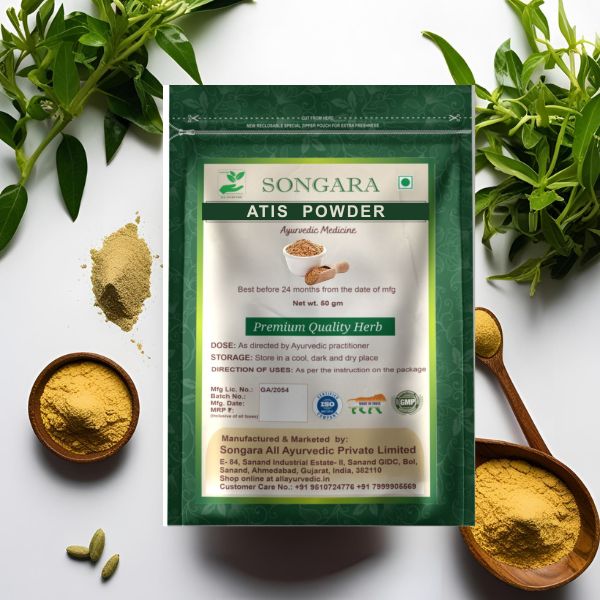
Atis Powder (Aconitum heterophyllum) – The Ayurvedic Digestive & Immune Booster
Atis Powder (Aconitum heterophyllum) – The Ayurvedic Digestive & Immune Booster
تعذر تحميل مدى توفر الطلب
Ativiṣā (Atis) – Product Monograph
1. Synonyms (पर्यायवाची नाम)
-
Sanskrit Synonyms:
-
Viṣā (विषा)
-
Ativiṣā (अतिविषा)
-
Viśvā (विश्वा)
-
Śṛṅgī (शृङ्गी) – root resembles a horn
-
Prativiṣā (प्रतिविषा) – opposite of poison, non-toxic variety
-
Aruṇā (अरुणा) – reddish root
-
Śuklakandā (शुक्लकन्दा) – white root tuber
-
Upaviṣā (उपविषा) – grows near poisonous varieties
-
Bhaṅgurā (भङ्गुरा) – brittle dried root
-
Ghuṇavallabhā (घुणवल्लभा) – easily attacked by insects
-
📖 Etymology:
Though belonging to the Aconitum (poisonous) genus, Ativiṣā is non-poisonous, hence “Prativiṣā.”
2. Regional Names
-
Hindi: Atisa (अतीस)
-
Marathi: Ativisa (अतिविष)
-
Bengali: Ataicha (अतैछ)
-
Punjabi: Arisa (अरीसा)
-
Telugu: Ativasa (अतिवस)
-
Kannada: Atibaje, Ativisa
-
Tamil: Ativadayam (अतिवदयम्)
-
Kashmiri: Atisa, Patisa
3. Botanical Description
-
Accepted Botanical Source:
-
Aconitum heterophyllum Wall. ex Royle (Ativiṣā)
-
Aconitum palmatum D. Don (Prativiṣā)
-
Sometimes adulterated with Asparagus tubers or other species
-
In South India, spurious substitutes: Cryptocoryne spiralis (Araceae)
-
-
Family: Ranunculaceae
-
Habitat:
-
Found in subalpine & alpine zones of Western Himalayas (2,500–3,900 m altitude)
-
Distribution: Kashmir (Pir Panjal) to Kumaon
-
-
Morphology:
-
Height: 2–4 ft tall herb
-
Stem: Round, erect
-
Leaves: Heteromorphous, ovate to orbicular-cordate; lower leaves long-petioled, upper leaves clasping stem
-
Flowers: Obpyramidal, borne in panicled racemes, bluish in color
-
Seeds: Small, black
-
Roots: Paired, tuberous, biennial, whitish or green bark; taste purely bitter, no tingling sensation (distinguishes from toxic aconites)
-
4. Chemical Constituents
-
Major Alkaloid: Atisine (≈0.4%) – primary active principle
-
Other Alkaloids:
-
Atidine, Histisine, Hetisine, Hetidine
-
Heterophylisine, Heterophylline, Heterophyllidine
-
Heteratisine, Isoatisine, Dihydroatisine
-
Hetisinone, Benzoyl heteratisine
-
-
Pharmacological Profile:
-
Much less toxic than aconitine & pseudaconitine
-
Atisine: produces hypotension
-
Whole root extract: induces hypertension (sympathetic stimulation)
-
Potent immunostimulant properties (enhances resistance)
-
5. Properties & Therapeutic Uses
Ayurvedic Properties (गुणधर्म)
-
Rasa (Taste): Kaṭu (Pungent), Tikta (Bitter)
-
Guna (Qualities): Laghu (Light), Rūkṣa (Dry)
-
Virya (Potency): Uṣṇa (Hot)
-
Vipāka (Post-digestive effect): Kaṭu
-
Doṣa Action: Pacifies Kapha and Pitta
Therapeutic Uses
-
Digestive & Intestinal:
-
Deepana, Pācana – improves appetite & digestion
-
Useful in Atisāra (diarrhoea), especially Ama-atīsāra (infective diarrhoea)
-
Chronic diarrhoeal disorders, dysentery
-
-
Fever & Infections:
-
Useful in Viṣamajvara (malaria, intermittent fevers)
-
Restores strength post-fever (bitter tonic, immunostimulant)
-
-
Respiratory:
-
Cough, vomiting, Kapha disorders
-
-
Parasitic Infestations:
-
Anthelmintic – given with Vidanga
-
-
Pediatric Disorders:
-
Safe for children in low doses
-
Used in diarrhoea, indigestion, cough
-
-
Toxicology:
-
Used in certain poisoning conditions, given with honey
-
⚠️ Cautions:
-
High dose may cause constipation.
-
Often adulterated – proper identification is crucial.
-
Non-toxic species, but misuse of substitutes (toxic aconites) can be dangerous.
6. Doses
-
Churna (Powder):
-
250–500 mg (as bitter tonic)
-
0.5–2 g (in diarrhoea, fever, digestive disorders)
-
-
Higher dose (with aromatics): up to 4–8 g (safe, non-toxic)
-
Formulations: Given with honey, curds, aromatic herbs, or Vidanga
✅ Summary:
Ativiṣā (Aconitum heterophyllum) is a unique non-toxic aconite root, prized in Ayurveda as a digestive, antipyretic, bitter tonic, and immunostimulant. It is especially effective in diarrhoea, dysentery, fevers (including malaria), pediatric disorders, and helminthiasis. With atisine alkaloid as the chief active principle, it differs from other aconites by being safe and non-poisonous.
مواد
مواد
الشحن والاسترجاع
الشحن والاسترجاع
أبعاد
أبعاد
تعليمات العناية
تعليمات العناية
يشارك